
Ghent is a historic and dynamic Belgian city, known for its medieval architecture, its Castle of the Counts, its picturesque canals, and its lively atmosphere. It combines heritage, culture, and an active student life.
We have had the opportunity to discover this splendid Belgian city several times. Here is an itinerary to fully savor Ghent in 24 hours.
As soon as we arrived in Ghent, we were instantly captivated by its vibrant medieval atmosphere. To begin our exploration, we chose to admire the city from the Sint-Michielsbrug Bridge.
The Sint-Michielsbrug Bridge in Ghent offers a spectacular panoramic view of the city’s iconic monuments, including the famous three towers. Its elegant architecture and central location make it a must-see spot to admire Ghent’s medieval charm.

From here, you can admire the majestic silhouette of the Belfry, Saint Bavo Cathedral, and Saint Nicholas Church. It’s a simply magical sight.
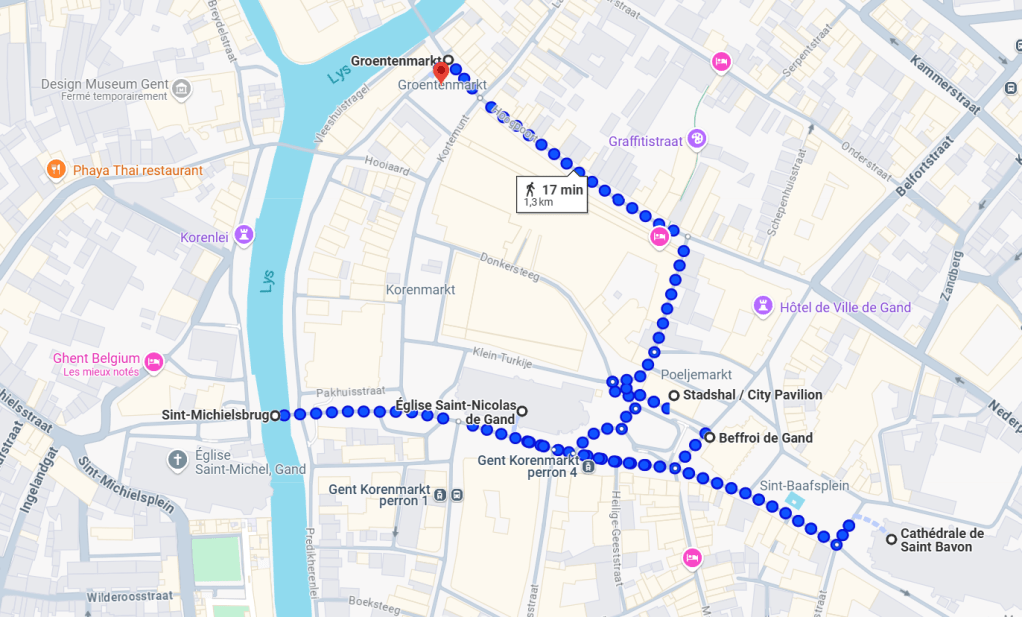
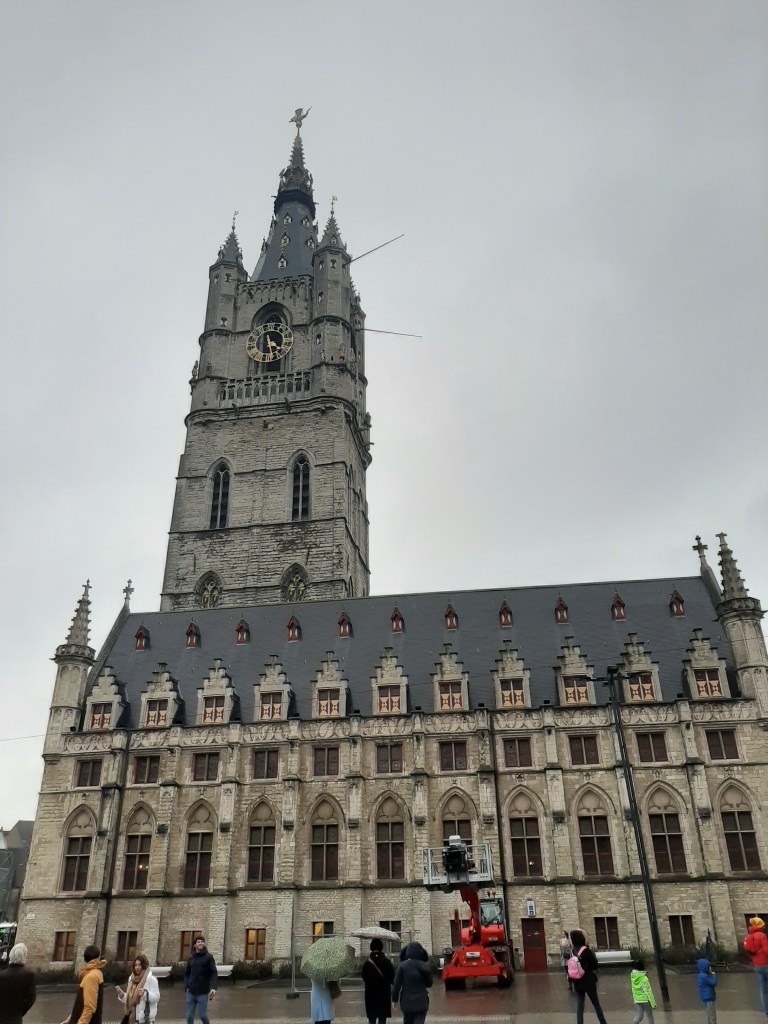
We then headed to the Belfry of Ghent, a symbol of the city and a UNESCO World Heritage Site. Built in the 14th century, it stands 91 meters high and offers an exceptional panoramic view of Ghent. Once used as a watchtower and vault for municipal privileges, it represents the city’s independence and power. Its carillon, composed of 54 bells, punctuates Ghent’s life, while its famous golden dragon, perched atop it, has watched over the city for centuries.
Right next door is Saint Bavo Cathedral. It is a masterpiece of Gothic architecture, renowned for its rich artistic and spiritual heritage. Built on the remains of an ancient Romanesque church, it houses magnificent stained-glass windows, impressive sculptures, and sumptuous Baroque decorations. Its most precious treasure is The Ghent Lamb, painted by the Van Eyck brothers, considered one of the masterpieces of Flemish painting. Majestic and imposing, the cathedral is a must-see for discovering the history and art of Ghent.

Then, we stopped at Saint Nicholas Church, another Gothic marvel, before strolling towards Ghent Stadshal.
It is a contemporary wood and glass building located in the heart of the city between the belfry and Saint Nicholas Church. Designed by architects Robbrecht & Daem, it contrasts with the surrounding medieval architecture. This covered space, inaugurated in 2012, serves as a meeting place and hosts various cultural events.

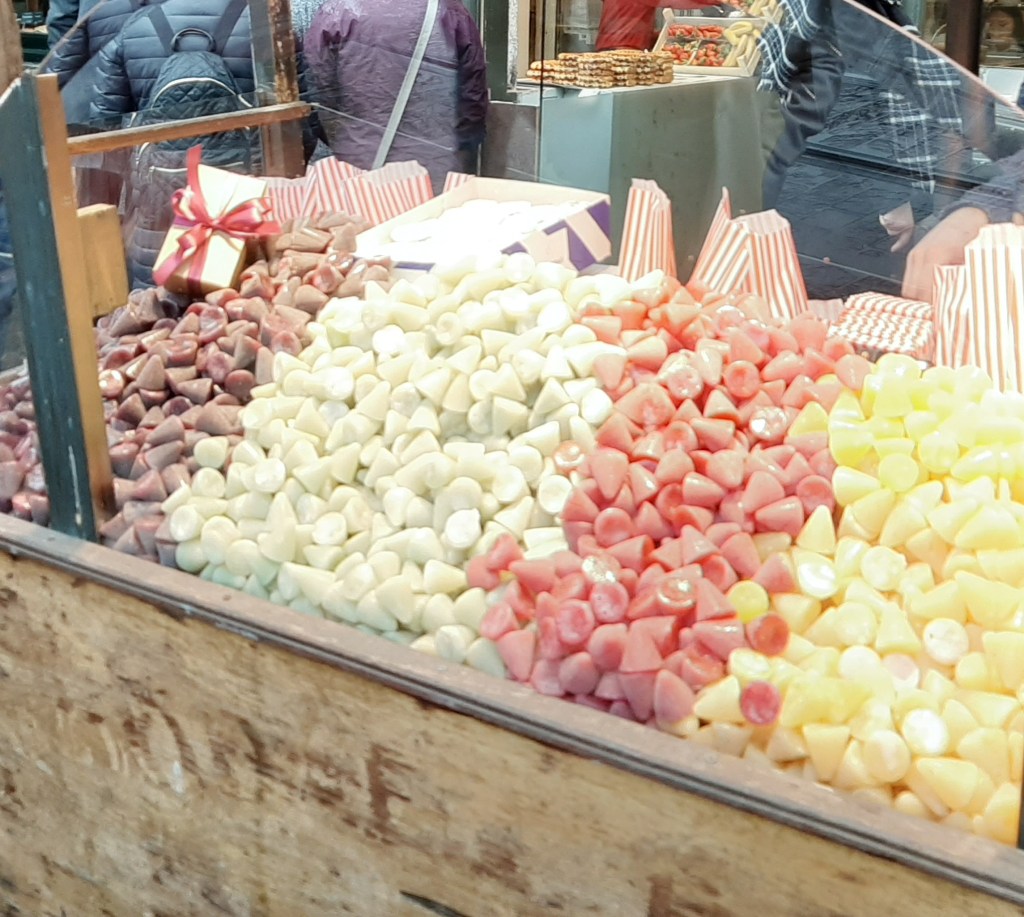
After this visit, a gourmet break is in order. We head to the Groentenmarkt square, where we discover a cuberdons vendor.
Cuberdons are traditional Belgian cone-shaped confections, with a crunchy outside and a soft inside. Generally purple in color, they are flavored with raspberry, although other flavors are now available. Made with gum arabic syrup, they are typical of the Ghent region and are often called « Neuzekes » (little noses) because of their shape. Deliciously sweet and artisanal, cuberdons are a true symbol of Belgian delicacies.
We continued our stroll by exploring the charming Graslei and Korenlei quays, among the most picturesque spots in Ghent. Along the Lys River, we marveled at the beautiful guild houses, their elegantly decorated and perfectly preserved facades. The peaceful atmosphere on the water prompted us to pause for a few photos. The reflections of the buildings in the river added a magical touch to the landscape, making each view even more captivating.


Then we wanted to see another side of Ghent by visiting Graffiti Street.
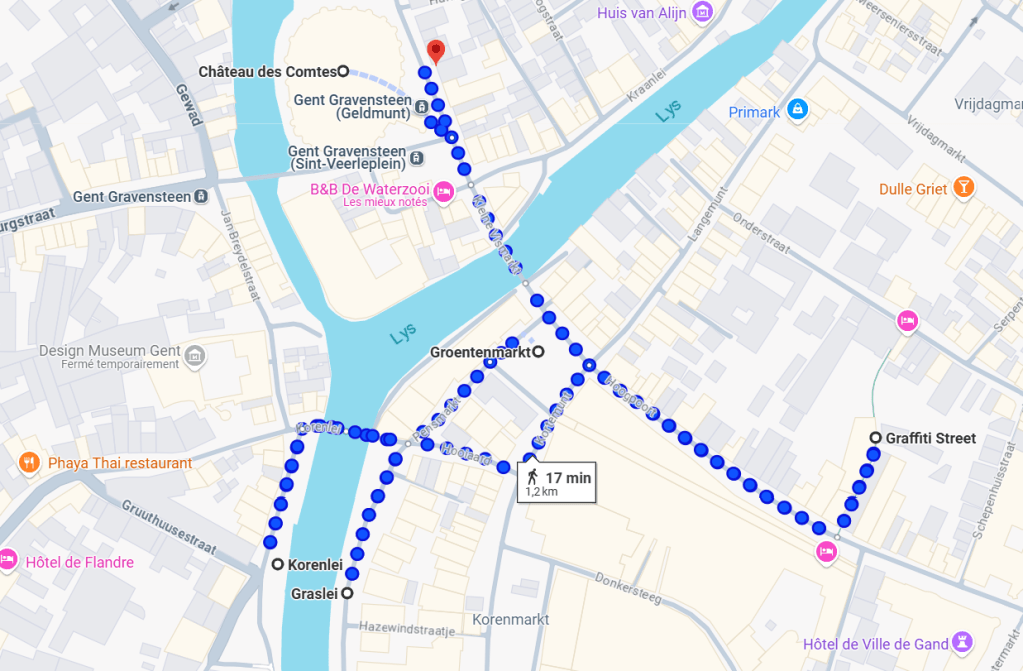
Graffiti Street is a unique place where urban art comes to life. This small alleyway, located not far from the historic center, is entirely covered in murals and creative graffiti, offering an explosion of colors and styles. The area is a true space of free expression for local and international artists, who leave their mark in the form of murals, illustrations, and messages. This dynamic and constantly evolving space reflects the alternative and modern spirit of the city, offering a stunning and immersive visual experience for visitors.

The atmosphere changes when we arrive at the Gravensteen Castle. This impressive medieval castle located in the heart of the city. Built in the 12th century by the Counts of Flanders, it served as a residence and defensive fortress. Today, the castle is one of Ghent’s major tourist attractions. It offers spectacular views of the city from its ramparts and houses a museum displaying historical artifacts, weapons, and armor, allowing visitors to delve into the region’s medieval history. With its imposing towers and well-preserved architecture, the Gravensteen represents the power and grandeur of the ancient lords of Ghent.

Before heading home, we started short stroll through the medieval Patershol district, a maze of cobbled streets and charming Flemish houses. The perfect place to experience the authenticity of Ghent and soak up its peaceful and welcoming atmosphere.

To reach Ghent-Saint-Pieters station, we opt for a long walk, leaving the historic city center behind and passing through the Citadel Park.

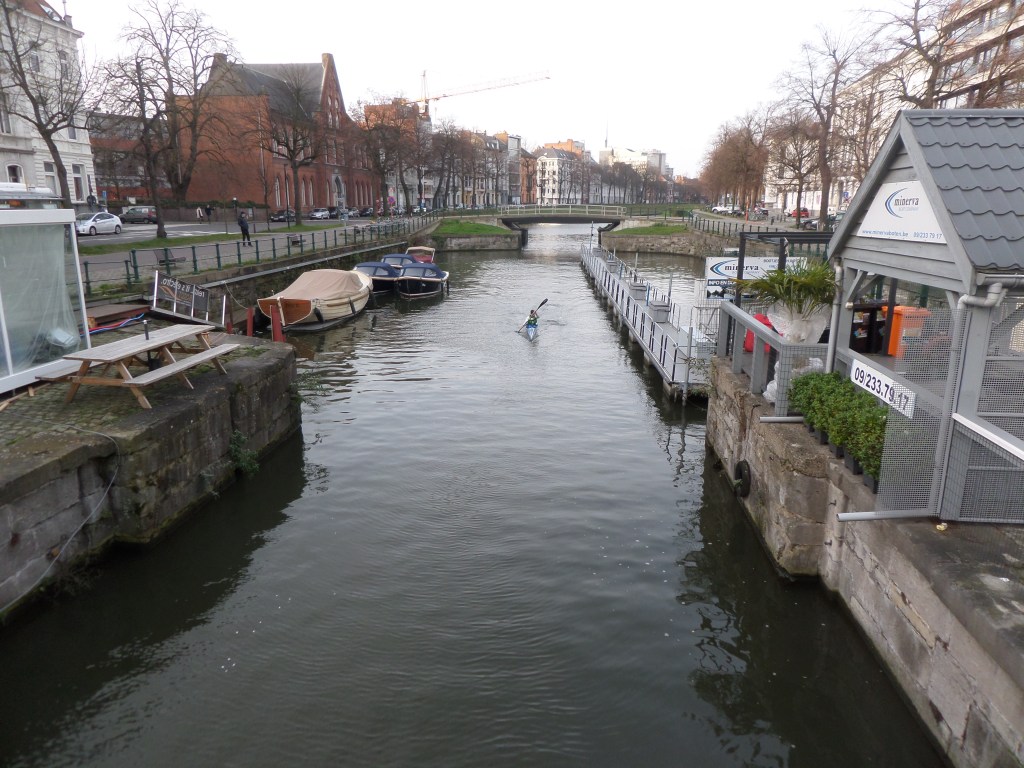
The Citadel Park is a true haven of peace. After so much exploring and walking, we enjoyed taking a moment to relax on a bench, surrounded by greenery, before continuing our journey.
In just one day, we discovered so many facets of Ghent: its historical heritage, its urban art, its local flavors, and its unique atmosphere, blending tradition and modernity. A city that captivated us and to which we returned several times.
 my-trip-memories.com